
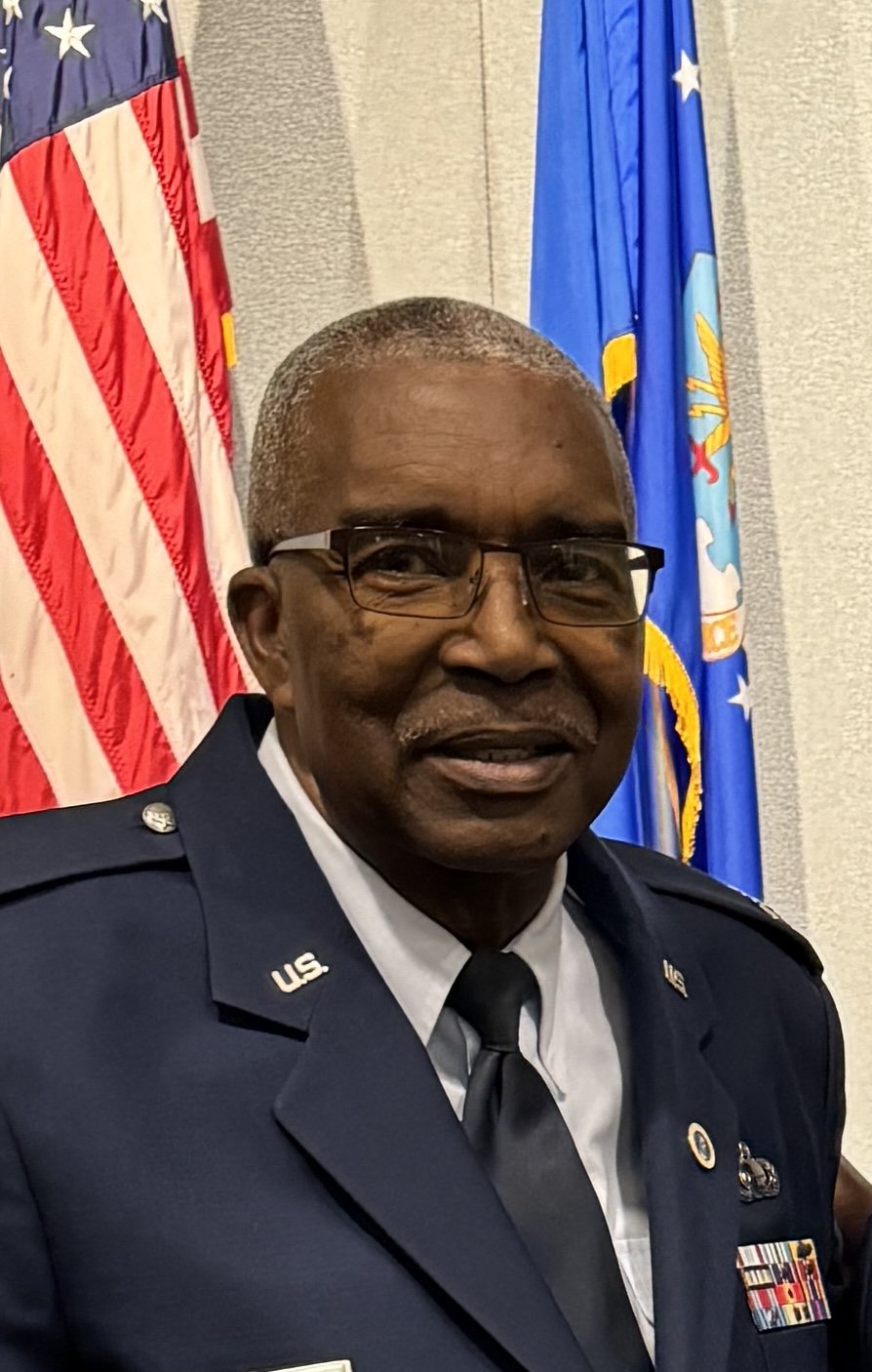
Colonel Donald C. Latson, U.S. Air Force (Ret.)
A 1974 graduate, 30-year Air Force veteran, and ADI founding donor reflects on belonging, service, and the responsibility to reach back.
This Veterans Day, Ancestors Dream Initiative honors a Gator whose service began on our campus.
When Colonel Donald C. Latson encourages today's Black students at the University of Florida to persevere, he speaks from experience.
“Never give up and keep your focus," he says. “Always remember who you are and you can make a difference."
His connection to UF spans more than five decades. He arrived as a first-generation college student, took part in Black Thursday, served 30 years in the Air Force, opened doors for future Gators, and became ADI's largest donor to date. Through it all, one principle has stayed constant: "Reach back and help someone else, pay it forward."
Finding his place at UF
Latson came to UF from an all-Black high school with 85 students in his graduating class. His whole school, grades seven through twelve, had about 370 students.
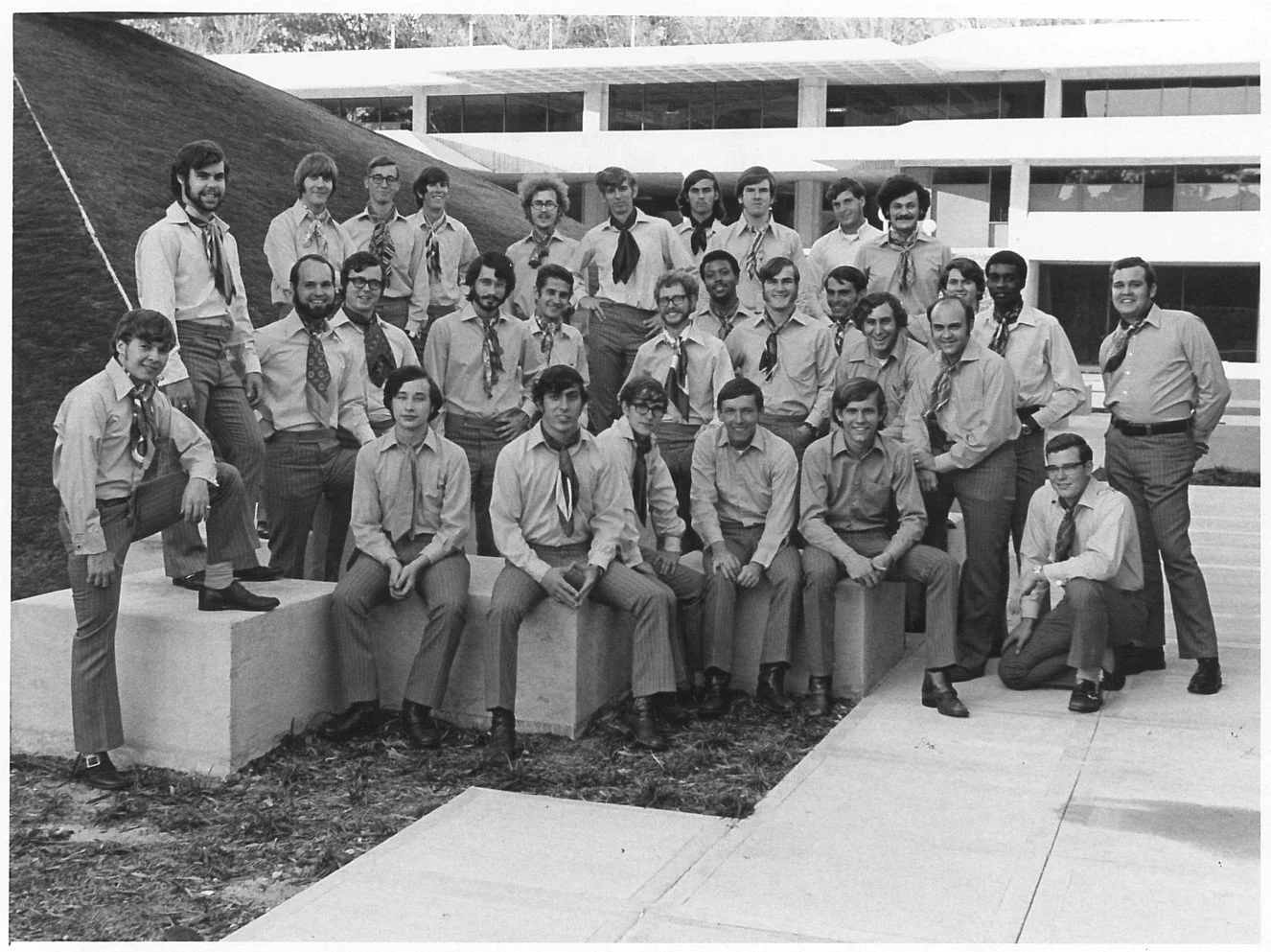
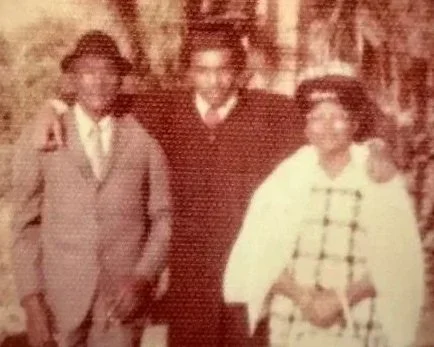
“I started UF in the summer and my humanities lecture session had more students than my school," he recalls.
Like most of the students who entered with him, he was the first in his family to go to college. He likes to refer to their group as the “Florida Experiment." In his words, about 250 Black students were brought to a campus of roughly 23,000 to see whether they could coexist at a large, predominantly white university.
The adjustment wasn’t easy, and the challenges went well beyond the classroom.
“UF was challenging for me,” he says.
Participated in Black Thursday
While he was a student, Latson took part in one of the defining moments in Black UF history. “I was a part of Black Thursday, April 1971," he recalls.
On April 15, 1971, members of UF's Black Student Union sat in at Tigert Hall, home of the president's office. They called on UF to recruit more Black students and faculty, open an Institute of Black Culture, and treat Black students fairly. Police arrested 66 Black students, and 123 Black students withdrew from the university in protest. Black Thursday helped lead to the founding of UF's Institute of Black Culture.
Latson remembers both the unrest and the response from fellow students.
“In the mood of the times (student unrest) it was very interesting to see the majority student reaction to what happened to us and the support."
His memories offer a personal view of a chapter often told through institutional milestones: what it felt like to be a young Black student pursuing an education while helping shape the university around him.
A career of service
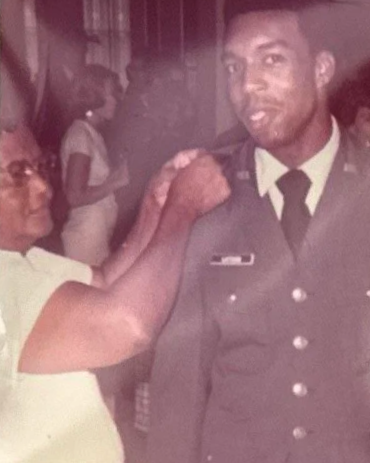
Latson’s mother pins on his second lieutenant bars at his Air Force commissioning in June 1975.
Latson graduated from UF in December 1974 with a degree in business management. He stayed two more quarters in graduate school to finish the Air Force ROTC program, part of the inaugural class of UF's two-year program, and was commissioned in June 1975.
He served 30 years in the Air Force. His final assignment was as an intelligence officer with the Joint Special Operations Command at Fort Bragg, North Carolina.
Yet when asked what makes him proudest, he points to his family. Latson is one of 14 children. Seven served in the military: six in the Air Force and one in the Navy.
"My brothers and I sacrificed over 146 years of service to our nation," he says.
That shared commitment is the achievement he places above any single assignment.
UF runs in the family, too. His youngest brother, Dennis Latson, graduated from UF in 1981 with a degree in horticulture.
Opening doors for future Gators
Latson's commitment to UF continued long after graduation.
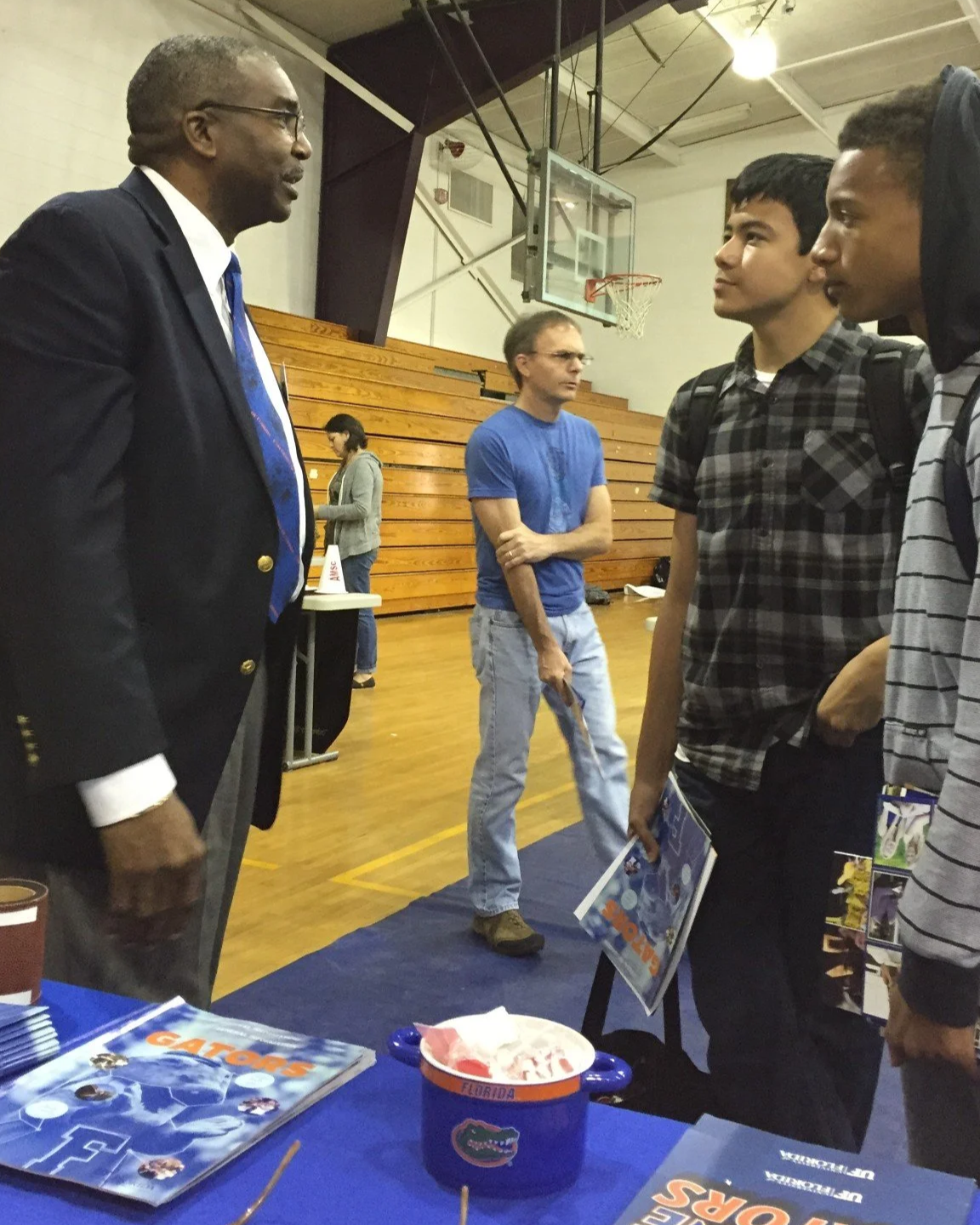
As an Atlanta Gator Club volunteer, Latson talks with prospective Gators at a 2015 college fair at Lakeside High School, one of many he worked across metro Atlanta.
In the 1980s, he and other Black UF graduates in Tampa organized focus groups to encourage high school students to consider the university. They also offered scholarships to spark interest. Their work caught the attention of national alumni leaders and led to new efforts to engage more of UF's graduates.
"We pursued ways to reach ALL UF alumni, not just a few," he recalls.
He went on to serve on the UF Alumni Association Board in the 1990s.
Later, he volunteered at college fairs with the Atlanta Gator Club, helping high school students picture their future at UF. He worked the room, talking with students and families.
Paying it forward through ADI
Today, Latson carries that commitment forward as a founding donor of Ancestors Dream Initiative. His generous gift helps ADI stand beside Black student leaders as they create programs, preserve cultural traditions, and build community at UF.
He hopes others will join him
“I pray that all of the Alumni and Alumnae of UF, all ethnicities will understand how critical this is and get on board. I applaud you for taking the initiative and putting this in place.”
His story connects generations of the Black UF experience: students who found their footing on an unfamiliar campus, alumni who worked to open doors, and today's leaders carrying those traditions forward. His advice gives that connection to its purpose.
"Reach back and help someone else, pay it forward."
Thank you for your service, Colonel Latson.
Colonel Latson is on board with ADI. Will you join him?
Based on Colonel Latson's written reflections shared with Ancestors Dream Initiative.
Learn more about Black Thursday.
